STOCHASTIC MODEL OF POPULATION STATUS DYNAMICS RELATED TO ZAKAT
Abstract
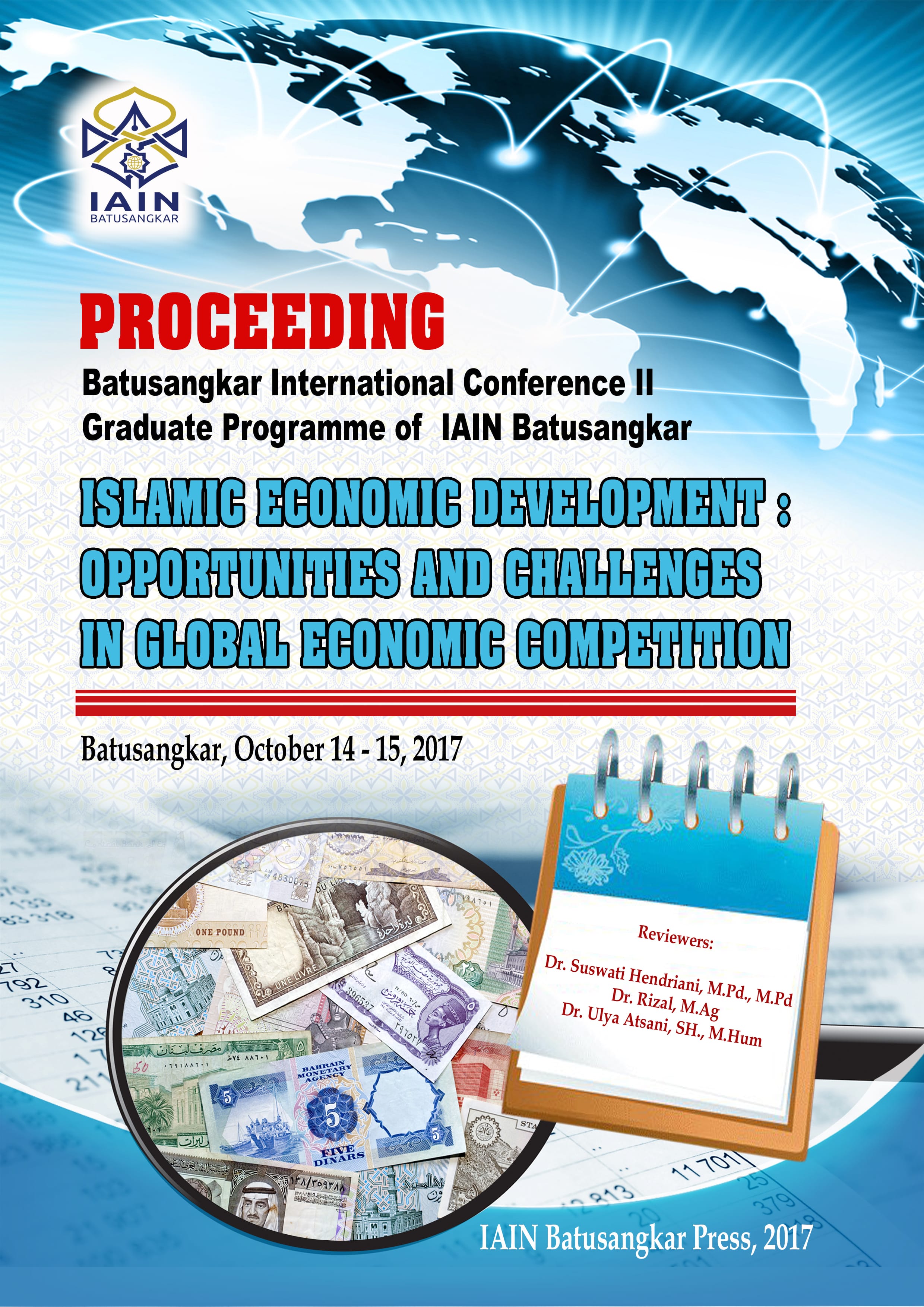
Poverty is one of the problems in Indonesia, which is a predominantly Moslem country. In Islam,  zakat can be used to decrease poverty if the all muzzakki fulfill the obligation and manage properly. The aim of this research is to develop a mathematical model that describes dynamics of economic group population associated to zakat in a small area (Kelurahan Puhun Pintu Kabun) in Bukittinggi city. The model is a Markov chain model that is presented by a transition probability matrices. We begin this research by collecting data through interviews with respondents, making the transition probability matrices from one until five steps, observing the characteristics of each situation, and drawing conclusion. The result declares that  every community status of zakat is reccurent, which means every community status of zakat has probability to return to original status.References
Izzan, Ahmad. 2009. Studi Kaidah Tafsir al-Quran, Bandung: Humaniora.
Parera. 2004. Teori Semantik, Jakarta, Erlangga Ade Tika Agustin Dkk, Analisis Perubahan Makna Kata Generalisasi Pada Rubrik Pendidikan Surat Kabar Jurnal Bogor Dan Implikasinya Terhadap Pembelajaran Bahasa Indonesia Di Sma (Program Studi Pendidikan Bahasa dan Sastra Indonesia, 2013) hlm. 3 vol 1.
https://id.wikipedia.org/wiki/Mobil diakses pada pukul 03. 37 tanggal 21 April 2016.
Chaer, Abdul. 2013. pengantar semantik bahasa indonesia, jakarta, PT Rineka Cipta.
http://www.almaany.com/quran diakses pada pukul 03. 37 tanggal 21 April 2016.
Jalaluddin dkk, 1990. Tafsir Jalalain Berikut Asbab An-nujulnya, Jilid I Bandung,: Sinar Baru.
Downloads
Published
Issue
Section
License
Authors who publish with this journal agree to the following terms:
- Authors retain copyright and grant the journal right of first publication with the work simultaneously licensed under a Creative Commons Attribution License that allows others to share the work with an acknowledgement of the work's authorship and initial publication in this journal.
- Authors are able to enter into separate, additional contractual arrangements for the non-exclusive distribution of the journal's published version of the work (e.g., post it to an institutional repository or publish it in a book), with an acknowledgement of its initial publication in this journal.
- Authors are permitted and encouraged to post their work online (e.g., in institutional repositories or on their website) prior to and during the submission process, as it can lead to productive exchanges, as well as earlier and greater citation of published work.
