THE EFFECT OF THE UNITARY TRUST (MYTHS) AS THE BEHAVIOR OF THE MINANGKABAU COMMUNITY
Abstract
The phrase of belief (myth) makes character or behavior in society. The social life of various cultures makes variations in behavior. Minangkabau culture shows that the behavior of the community departs from the expression of popular belief, which at this moment the influence of myth is still in use in everyday life. In terms of the function of the myth itself is in use the community in providing advice, reprimands, education / how to educate, child prohibition or kemanakan, as well as some people who are considered necessary, make this mythical behavior develops and form the character of society itself. (Myth) is still rooted, making the culture Minang still able to survive in turmoil of cultural variations and life kemodrenan. Progress in thinking, acting to make Minangkabau culture smart in behaving. This paper reveals the behavior of Minangkabau people to express the beliefs of the people or more in the know with myths.
References
Fattah Nanang, 1996, Landasan Manajemen Pendidikan, Bandung: PT Remaja Rosda Karya.
Hasibuan Malayu S.P, 1990. Manajemen Dasar, Pengetian, dan Masalah, Jakarta: CV. Haji Mas Agung.
Pidarta Made, 1988. Manajemen Pendidikan Indonesia, Jakarta: PT. Bina Aksara.
Ridwan, 2004. Metode dan Teknik Menyusun Tesis, Bandung: Al-Fabeta.
SoetopoHendityat dan SoemantoWasty, 1988, Kepemimpinan dan Supervisi Pendidikan, Jakarta: Bina Aksara.
Undang-Undang Republik Indonesia Nomor 32 Tahun 2009 Tentang Perlindungan dan Pengelolaan Lingkungan Hidup.
UsmanHusaini, 2006. Manajemen Teori, Praktik, Dan Riset Pendidikan, Jakarta: Bumi Aksara.
UU Sisdiknas No. 20 Tahun 2003.
Wahjosumidjo, 1999. Kepemimpinan Kepala Madrasah Tinjauan Teoritik dan Permasalahan, Jakarta: Raja Grafindo Persada.
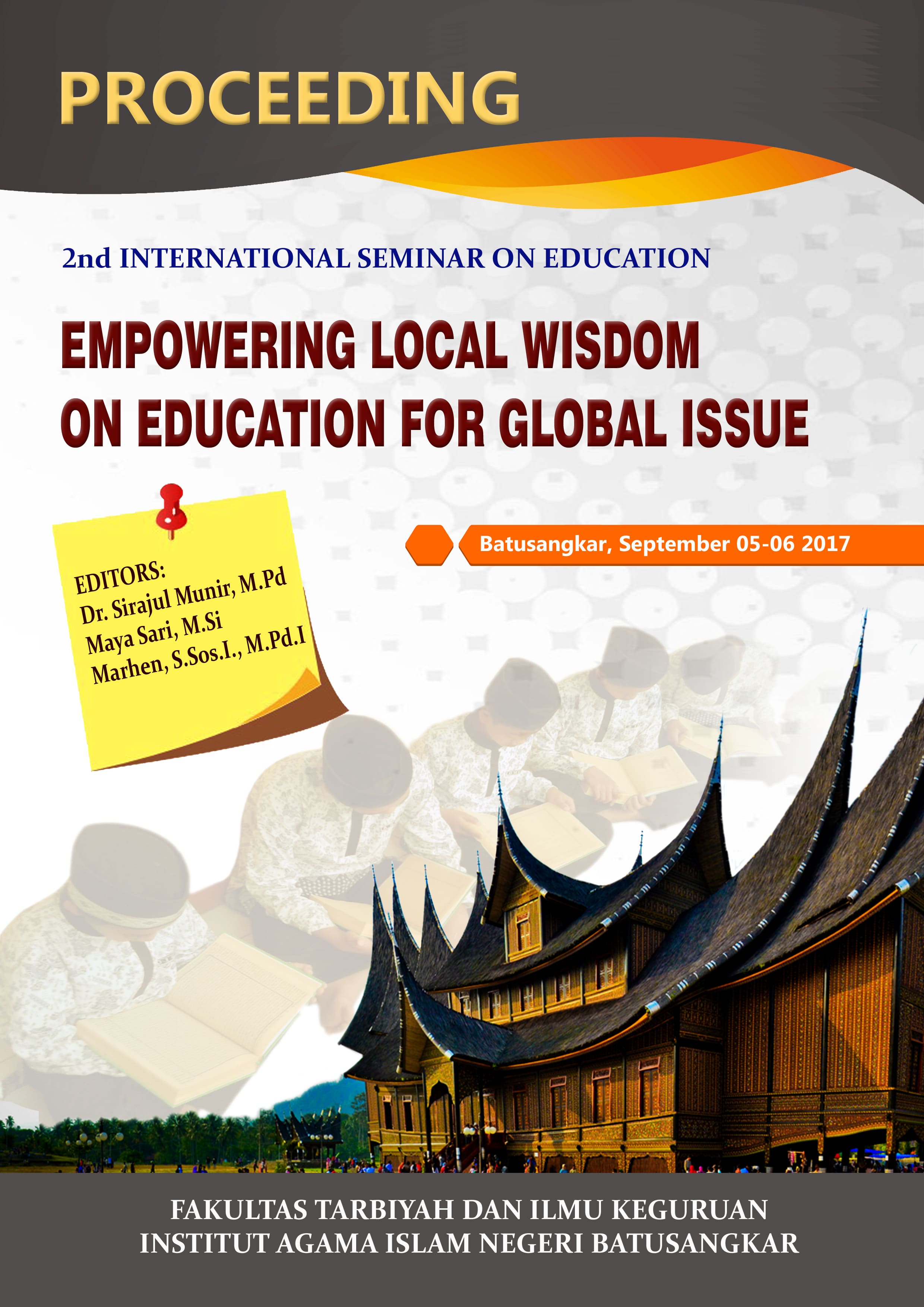
Downloads
Published
Issue
Section
License
Authors who publish with this journal agree to the following terms:
- Authors retain copyright and grant the journal right of first publication with the work simultaneously licensed under a Creative Commons Attribution License that allows others to share the work with an acknowledgement of the work's authorship and initial publication in this journal.
- Authors are able to enter into separate, additional contractual arrangements for the non-exclusive distribution of the journal's published version of the work (e.g., post it to an institutional repository or publish it in a book), with an acknowledgement of its initial publication in this journal.
- Authors are permitted and encouraged to post their work online (e.g., in institutional repositories or on their website) prior to and during the submission process, as it can lead to productive exchanges, as well as earlier and greater citation of published work.
