
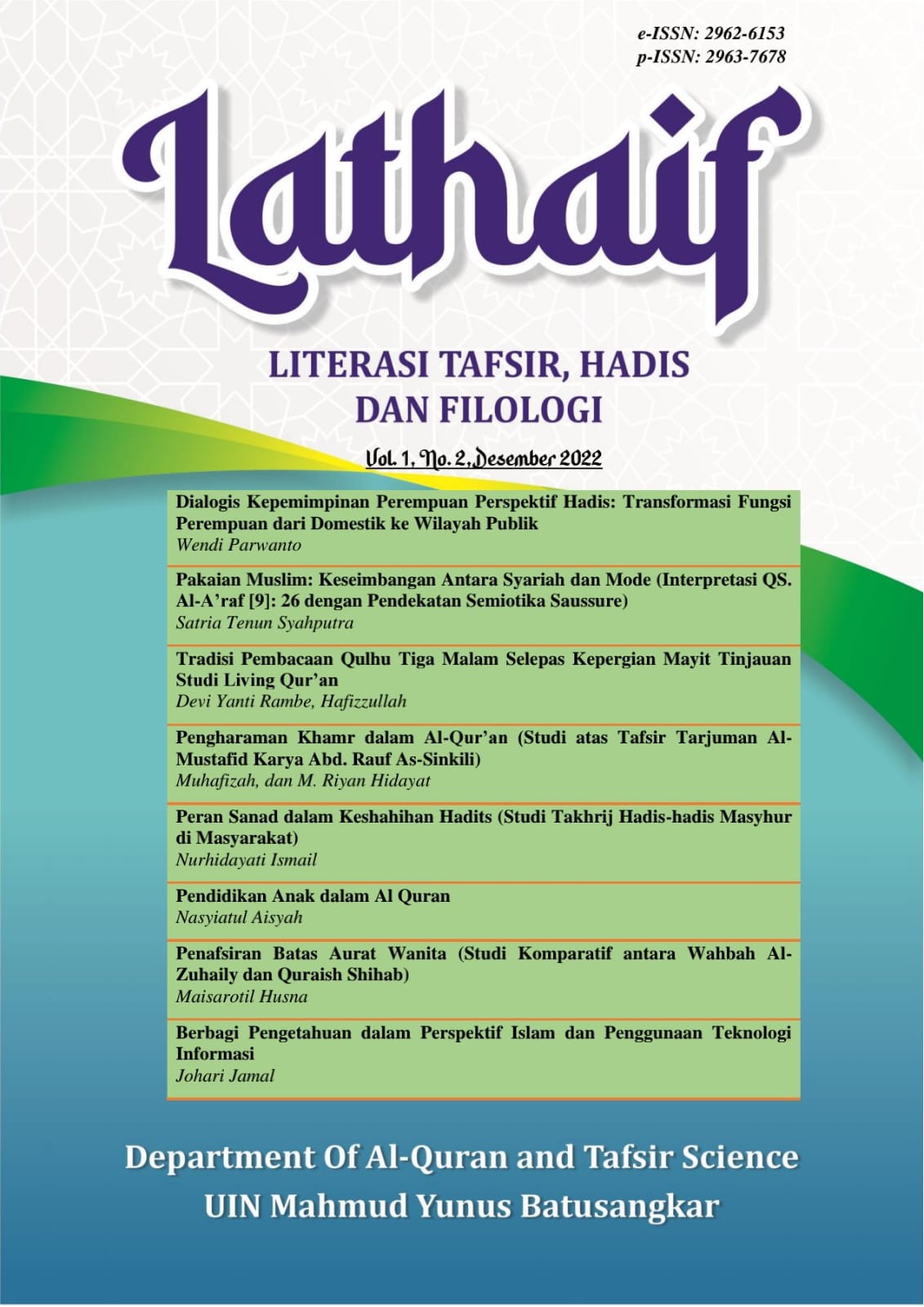
Peran Sanad dalam Keshahihan Hadits (Studi Takhrij Hadis-hadis Masyhur di Masyarakat)
DOI:
https://doi.org/10.31958/lathaif.v1i2.7888Keywords:
Takhrij, Hadis, PopulerAbstract
Sanad is important in Islam. The existence of sanad in a hadith determines whether a hadith can be accepted (Maqbul) or ditolah (mardud). In addition, many of the famous (popular) hadiths circulating in the community are not necessarily the hadith considered shahih or even false. This study aims to examine several hadiths that are popular in the community. The method used in this study is the takhrij method, by examining the historical sanad-sanad in question. In this study, the history studied was three pieces. From the results of oenelitian, the three histories that were originally considered hadith, it turns out that none of the hadiths have a history from the Prophet Muhammad SAW, some are maudhu' (false), and are also popular Arabic syi'ir.References
al-Albani, M. N. (2000). Silsilah al-Ahâdis al-Dha’îfah wa al-Maudhû’ah wa Atsaruha al-Sayyi; fi al-Ummah (Vol. 6). Riyadh: Maktabah al-Ma’ârif.
al-Baghdadi, A. B.-K. (1984). Iqtidha’ al-‘Ilmi al-‘Amali. Beirut: Al-Maktabah al-Islamiy.
al-Baghdady, A. B.-K. (1417 H). Târikh Baghdad wa Zuyûluh. Beirut: Dâr al-Kitab al-Ilmiyah.
al-Ghanimân, A. b. (1988). Syarhu Kitâb al-Tauhîd min Shahih al-Bukhâri. Damanhur: Maktabah Layyinah.
al-Jauziyah, I. Q. (T.th). Madârij al-Sâlikîn Baina Manâzil Iyyâka Na’budu wa Iyyâka Nasta’în. Beirut: Dâr al-Kutûb al-Ilmyah.
al-Maraghi, A. M. (1974). Tafsir al-Maraghi. Mesir: Syirkah Maktabah.
al-Qahthani, S. b. (2001). Al-Hadyu al-Nabawiyah fi Tarbiyah al-Aulâd fi Dhaui al-Kitab wa al-Sunnah. Riyad: Matba’ah Safîr.
al-Sudûny, A. a.-F. (2011). al-Tsiqât min Man lam Yuqa’ fi Kutub al-Sittah. Yaman: Markaz al-Nu’man.
al-Zahaby, S. A. (2003). Târikh al-Islam wa wafayât al-Masyâhir wa al-A’lâm. Kairo: Dâr al-Maghrib al-Islamy.
al-Zahaby, S. A. (2006). Siyaru a’lam al-Nubalâ’. Kairo: Dâr al-Hadis.
Bâli, W. A. (1410). al-Tharîq ila al-Walad al-Shâlih. Riyad: Dâr al-Dhiya’.
Taimiyah, A. a.-A. (1425 H). Naqdu Asâs al-Taqdis. Madinah: Maktabah al-‘Ulûm wa al-Hikam.
al-Baghdadi, A. B.-K. (1984). Iqtidha’ al-‘Ilmi al-‘Amali. Beirut: Al-Maktabah al-Islamiy.
al-Baghdady, A. B.-K. (1417 H). Târikh Baghdad wa Zuyûluh. Beirut: Dâr al-Kitab al-Ilmiyah.
al-Ghanimân, A. b. (1988). Syarhu Kitâb al-Tauhîd min Shahih al-Bukhâri. Damanhur: Maktabah Layyinah.
al-Jauziyah, I. Q. (T.th). Madârij al-Sâlikîn Baina Manâzil Iyyâka Na’budu wa Iyyâka Nasta’în. Beirut: Dâr al-Kutûb al-Ilmyah.
al-Maraghi, A. M. (1974). Tafsir al-Maraghi. Mesir: Syirkah Maktabah.
al-Qahthani, S. b. (2001). Al-Hadyu al-Nabawiyah fi Tarbiyah al-Aulâd fi Dhaui al-Kitab wa al-Sunnah. Riyad: Matba’ah Safîr.
al-Sudûny, A. a.-F. (2011). al-Tsiqât min Man lam Yuqa’ fi Kutub al-Sittah. Yaman: Markaz al-Nu’man.
al-Zahaby, S. A. (2003). Târikh al-Islam wa wafayât al-Masyâhir wa al-A’lâm. Kairo: Dâr al-Maghrib al-Islamy.
al-Zahaby, S. A. (2006). Siyaru a’lam al-Nubalâ’. Kairo: Dâr al-Hadis.
Bâli, W. A. (1410). al-Tharîq ila al-Walad al-Shâlih. Riyad: Dâr al-Dhiya’.
Taimiyah, A. a.-A. (1425 H). Naqdu Asâs al-Taqdis. Madinah: Maktabah al-‘Ulûm wa al-Hikam.
Downloads
Published
2022-12-31
Issue
Section
Articles
License
Copyright (c) 2022 Nurhidayati Ismail

This work is licensed under a Creative Commons Attribution-NonCommercial 4.0 International License.
Authors who publish with?áLathaif: Literasi Tafsir, Hadis dan Filologi?áagree to the following terms:
- Authors retain copyright and grant the journal right of first publication with the work simultaneously licensed under a?áCreative Commons Attribution-NonCommercial 4.0 International License?á(CC BY-NC 4.0) that allows others to share the work with an acknowledgment of the work's authorship and initial publication in this journal.
- Authors are able to enter into separate, additional contractual arrangements for the non-exclusive distribution of the journal's published version of the work (e.g., post it to an institutional repository or publish it in a book), with an acknowledgment of its initial publication in this journal.
- Authors are permitted and encouraged to post their work online (e.g., in institutional repositories or on their website) prior to and during the submission process, as it can lead to productive exchanges, as well as earlier and greater citation of published work (See?áThe Effect of Open Access).


