
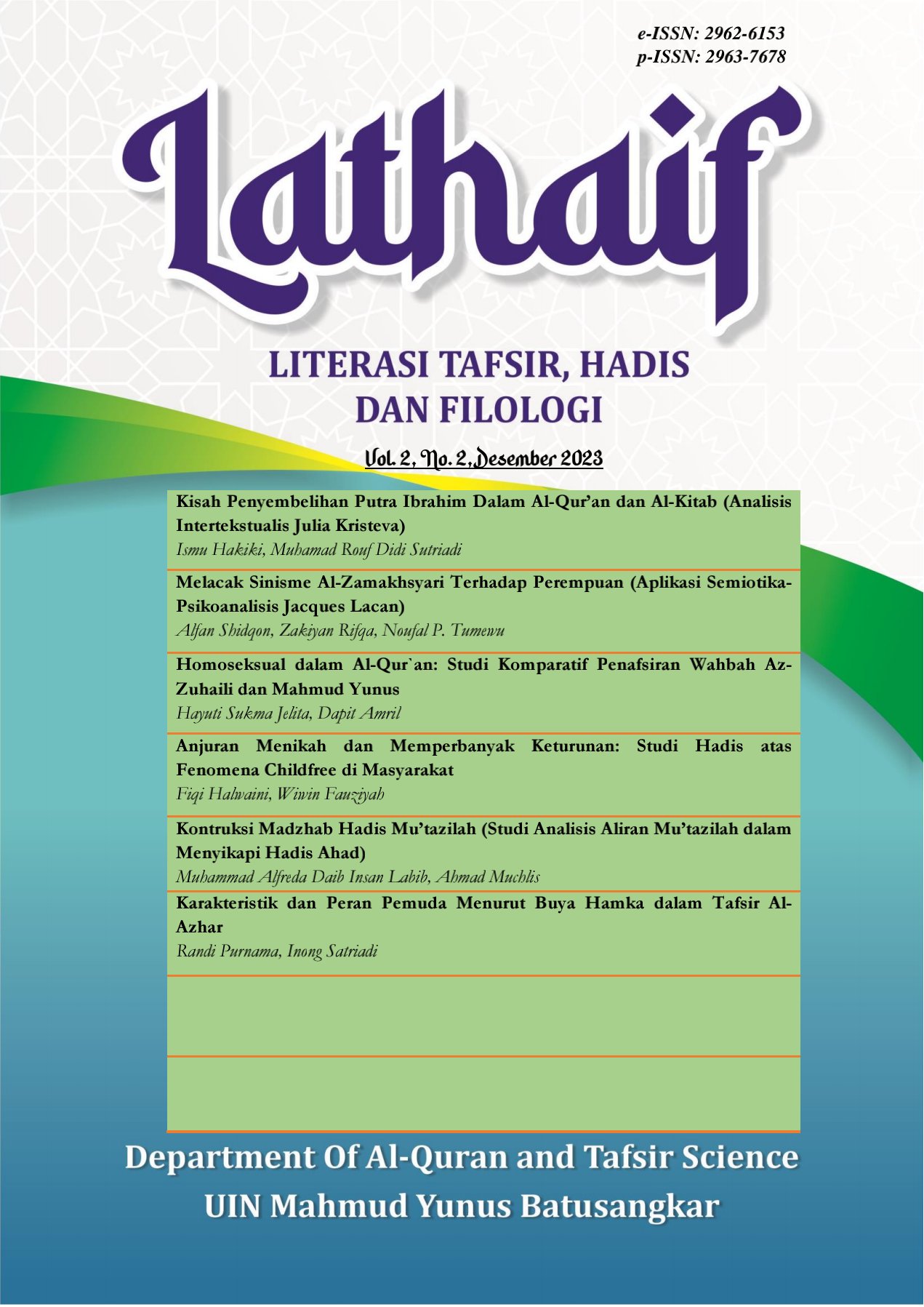
Homoseksual dalam Al-Qur`an: Studi Komparatif Penafsiran Wahbah Az-Zuhaili dan Mahmud Yunus
DOI:
https://doi.org/10.31958/lathaif.v2i2.10921Keywords:
Homosexuality, Al-Qur`an, comparativeAbstract
The main problem in this research is homosexuality in the Qur'an, a comparative study of the interpretation of Wahbah Az-Zuhaili and Mahmud Yunus.  The purpose of this research is to find out and identify the similarities and differences in the interpretation of Az-Zuhaili's and Mahmud Yunus's interpretations of homosexuality.  This type of research is library research.  The method used in this study is the muqaran method by analyzing the interpretation of two figures related to homosexuality by using a comparative method.  while analyzing the interpretation using the interpretation approach.  Primary data sources of this study are the verses of the Koran, Al Munir's commentary by Wahbah Az-Zuhaili and Mahmud Yunus's interpretation of the Qur'an Karim.  while the secondary data of this research are the results of research or original theoretical or theoretical writings, dictionaries, books, articles and journals that are relevant to this research.  The results of this study conclude first, the Qur'an views homosexual behavior as fahisyah because it violates normal human nature to like the opposite sex.  there is also a difference between the two mufassirs in interpreting lafadz fahisyah mufassir Wahbah Az-Zuhaili interprets it as an abomination while Mahmud Yunus interprets it as a crime.  second, there are differences and similarities in the interpretation of these two commentators, namely in the punishment given by Allah, namely (Wahbah Az-Zuhaili: Allah punished the people of the prophet Lut in the form of a hail of stones and destroyed their country. Meanwhile, Mahmud Yunus interpreted Allah to punish the people of the prophet Lut  in the form of rain of pebbles, a very great earthquake and destroyed their country.References
Arikunto, S. (2006). Prosedur Penelitian Suatu Pendekatan Praktik, Edisi Revisi VI. Jakarta: Rineka Cipta.
Althursina, A. H. (2020). Penafsiran Siti Muhda Mulia Terhadap Homoseksual Kaum Nabi Luth Dalam Al-Qur'an. Banda Aceh: UIN AR-Raniry Darussalam.
Awaluddin, R. Z. (2022). Larangan Homoseksual: Studi Analisis Tafsir Maqashidi Pada Qs.Al-a'raf :80-81. Jurnal Ilmu Al-Qur'an dan Tafsir, 18.
Dewi, R. (2019).Penyelesaian Homoseksual Dalam Al-qur'an : Studi Komparatif Tafsir Qur'an Mahmud Yunus Dan Tafsir Al-azhar Buya Hamka. Bandung: UIN Sunan Gunung Jati.
P.Irawan. (2006). Penelitian Kualitatif dan Kuantitatif. Jakarta: DIA Fisip UI.
Khudriah. (2021). Orientasi Seksual (LGBT) Dalam Al-Qur` an Pendekatan Al-maqasidi. Jakarta: UIN Syarif Hidayatullah.
Salim, Abd Muin. (2005). Metodologi Ilmu Tafsir. Yogyakarta : Teras.
Santoso, S. B. (2000). Tingkat Homoseksual Pada Narapidana Ditinjau dari Lama Menjalani Pidana Penjara. Semarang: Unika Soegijapranata.
Sugono, Dendy. (2008). Kamus Besar Bahasa Indonesia. Jakarta : Pusat Bahasa.
Surtiretna, N. (2006). Remaja dan Problem Seks :Tinjauan Islam dan Medis . Bandung: Remaja Rosdakarya.
Royana dkk. (2023). Pandangan Wahbah Az-Zuhaili Tentang Ayat-Ayat Homoseksual Dalam Tafsir Al-Munir (Analisis QS. Al-A`raf Ayat 80-84). IJERT. Hal. 4
Wahyu Ihsan, U. F. (2022). LGBT Dan Liwat Umat Nabi luth Dalam Perspektif Tafsir. Fucosis, 24.
Yanggo, H. T. (2018). Penyimpangan Seksual (LGBT) Dalam Pandangan Hukum Islam. Jurnal Misykat. 2.
Yunus, M. (2011). Tafsir Qur`an Karim. Ciputat: PT. Mahmud Yunus Wa Dzururiyah
Zed, M. (2004). Metode Penelitian Kepustakaan. Jakarta : Yayasan Obor Indonesia.
Zuhaili, P. D. (2013). Tafsir Al-Munir : Akidah, Syari`ah , dan Manhaj. Jakarta: Gema Insani.
Althursina, A. H. (2020). Penafsiran Siti Muhda Mulia Terhadap Homoseksual Kaum Nabi Luth Dalam Al-Qur'an. Banda Aceh: UIN AR-Raniry Darussalam.
Awaluddin, R. Z. (2022). Larangan Homoseksual: Studi Analisis Tafsir Maqashidi Pada Qs.Al-a'raf :80-81. Jurnal Ilmu Al-Qur'an dan Tafsir, 18.
Dewi, R. (2019).Penyelesaian Homoseksual Dalam Al-qur'an : Studi Komparatif Tafsir Qur'an Mahmud Yunus Dan Tafsir Al-azhar Buya Hamka. Bandung: UIN Sunan Gunung Jati.
P.Irawan. (2006). Penelitian Kualitatif dan Kuantitatif. Jakarta: DIA Fisip UI.
Khudriah. (2021). Orientasi Seksual (LGBT) Dalam Al-Qur` an Pendekatan Al-maqasidi. Jakarta: UIN Syarif Hidayatullah.
Salim, Abd Muin. (2005). Metodologi Ilmu Tafsir. Yogyakarta : Teras.
Santoso, S. B. (2000). Tingkat Homoseksual Pada Narapidana Ditinjau dari Lama Menjalani Pidana Penjara. Semarang: Unika Soegijapranata.
Sugono, Dendy. (2008). Kamus Besar Bahasa Indonesia. Jakarta : Pusat Bahasa.
Surtiretna, N. (2006). Remaja dan Problem Seks :Tinjauan Islam dan Medis . Bandung: Remaja Rosdakarya.
Royana dkk. (2023). Pandangan Wahbah Az-Zuhaili Tentang Ayat-Ayat Homoseksual Dalam Tafsir Al-Munir (Analisis QS. Al-A`raf Ayat 80-84). IJERT. Hal. 4
Wahyu Ihsan, U. F. (2022). LGBT Dan Liwat Umat Nabi luth Dalam Perspektif Tafsir. Fucosis, 24.
Yanggo, H. T. (2018). Penyimpangan Seksual (LGBT) Dalam Pandangan Hukum Islam. Jurnal Misykat. 2.
Yunus, M. (2011). Tafsir Qur`an Karim. Ciputat: PT. Mahmud Yunus Wa Dzururiyah
Zed, M. (2004). Metode Penelitian Kepustakaan. Jakarta : Yayasan Obor Indonesia.
Zuhaili, P. D. (2013). Tafsir Al-Munir : Akidah, Syari`ah , dan Manhaj. Jakarta: Gema Insani.
Downloads
Published
2023-12-18
Issue
Section
Articles
License
Copyright (c) 2023 Hayuti Sukma Jelita

This work is licensed under a Creative Commons Attribution-NonCommercial 4.0 International License.
Authors who publish with?áLathaif: Literasi Tafsir, Hadis dan Filologi?áagree to the following terms:
- Authors retain copyright and grant the journal right of first publication with the work simultaneously licensed under a?áCreative Commons Attribution-NonCommercial 4.0 International License?á(CC BY-NC 4.0) that allows others to share the work with an acknowledgment of the work's authorship and initial publication in this journal.
- Authors are able to enter into separate, additional contractual arrangements for the non-exclusive distribution of the journal's published version of the work (e.g., post it to an institutional repository or publish it in a book), with an acknowledgment of its initial publication in this journal.
- Authors are permitted and encouraged to post their work online (e.g., in institutional repositories or on their website) prior to and during the submission process, as it can lead to productive exchanges, as well as earlier and greater citation of published work (See?áThe Effect of Open Access).


