
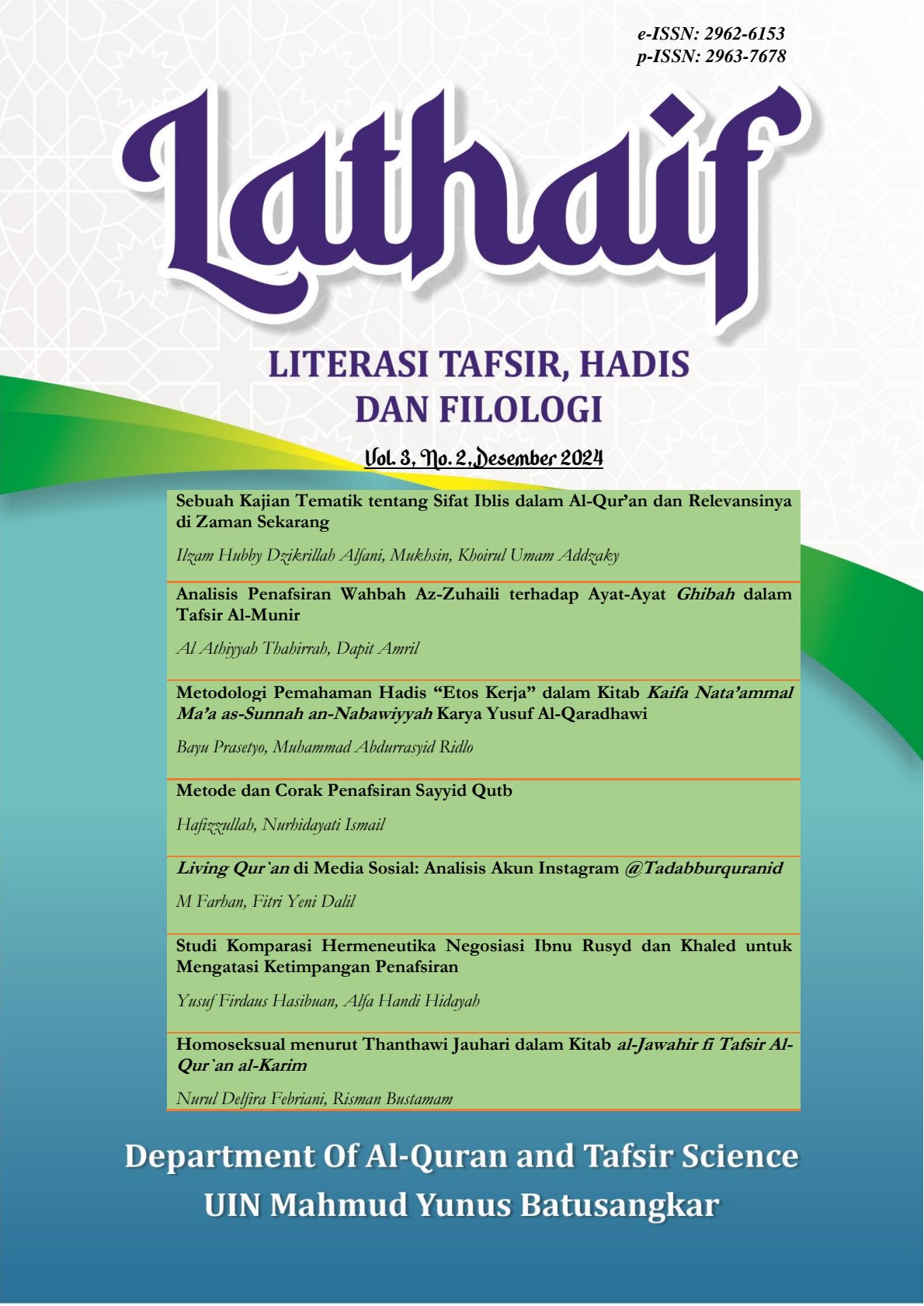
Living Qur`an di Media Sosial: Analisis Akun Instagram @Tadabburquranid
DOI:
https://doi.org/10.31958/lathaif.v3i2.13696Kata Kunci:
Living Qur`an, Social Media, Instagram, @TadabburquranidAbstrak
The purpose of this study is to identify the verses of the Qur'an written on the @Tadabburquranid Instagram account and to explain how the form of classification of the verses of the Qur'an written on the @Tadabburquranid Instagram account. This research is a qualitative research using descriptive method. The results of this study indicate that: (1) The Living Qur'an phenomenon has undergone a significant transformation in the digital era, especially through the use of Qur'anic verses on social media such as Instagram. In 2019 the Instagram account @Tadabburquranid has uploaded 23 posts containing verses of the Qur'an consisting of 21 surahs and 29 verses, which means that one post can contain more than one surah and one verse. (2) The verses posted on the @Tadabburquranid account can be classified based on the outlines of the content of the Qur'an according to the thoughts of Yasir and Jamaruddin, namely: faith (Tawhid), teachings about worship, laws and regulations, wa`ad and wa`id, stories in the Qur'an and the basis of science.Referensi
Aat Hidayat. (2015). Syura dan Demokrasi Dalam Perspektif al-Qur’an. Addin, Vol 9, No 2.
Andiko, T. (2017). Syura dan Demokrasi Barat: Kritik dan Solusi Menuju Demokrasi Islam, Al-IMARAH. Jurnal Pemerintahan Dan Politik Islam, 12(2).
A’yun, Q. (2020). Resepsi al-Qur’an di Media Sosial: Studi Kasus Film Animasi Nussa Episode ‘Hiii Serem!!!,. Living Islam: Journal of Islamic Discourses, 3 (2).
Bowo Sugiarto. (2021). Demokrasi, Agama, dan Negara di Indonesia Pasca-Soeharto [Democracy, Religion, and the State in Post-Suharto Indonesia]” in Demokrasi Tanpa Demos, Refleksi 100 Ilmuan Sosial Politik Tentang Kemunduran Demokrasi di Indonesia A. Wijayanto, A.P. Budiarti, and H.P. Wiratraman. LP3ES.
Hamdan Zoelva. (2022). The Development of Islam and Democracy in Indonesia. Constitutional Review. 8(1).
Irawan, B. B. (n.d.). Perkembangan Demokrasi di Negara Indonesia. Jurnal Ilmiah Hukum dan Dinamika Masyarakat (Vol. 5). Universitas 17 Agustus 1945 Semarang.
Mansyur, M. (2007). Metodologi Penenlitian Living Qur’an Dan Hadis. Yogyakarta: Teras.
Muhaemin Muhaemin dkk. (2021). The Principles of Democracy in Islam and its Relationship to the Indonesian State Administration System. IOSR Journal Of Humanities And Social Science (IOSR-JHSS), 26, Issue 11, Series 5 (), 10–20.
Muhtadin, C. (2022). Tafsir Al-Qur`an di Media Sosial: Studi Model Tafsir Pada Akun Instagram @Tadabburquranid. Skripsi
Mustaqim, A. (2015). Metode Penelitian Alquran dan Tafsir. Yogyakarta: Idea Press Yogyakarta.
Pratiwi, H. A., & Isnaini, S. N. (2023). Fenomena Konten Video Quotes Islami di Media Sosial Dalam Akun Instagram @kulometer_(Kajian Living Qur`an). JIQTA:Jurnal Ilmu Al-Qur`an Tafsir, 2 (1), 17.
Rahmayani, T. (2018). Pergeseran Otoritas Agama dalam Pembelajaran Al-Qur`an. Jurnal Maghza, 3 (2), 190.
Rahmi, Z. (2021). Studi Living Qur`an Dalam Tradisi Pembacaan Surat Ar-Rum Ayat 21 Sebelum Melakukan Akad Nikah di Kecamatan Cot Girek Aceh Utara. Jurnal Kajian Dakwah dan Masyarakat Islam, 11 (1), 125.
Syamsuddin, S. (2007). Metodologi Penelitian Living Qur’an dan Hadis. Yogyakarta: TH-Press.
Yasir, M., & Jamaruddin, A. (2016). Studi Al-Qur`an. Pekanbaru: CV Asa Riau.
https://instagram.com/tadabburquranid?igshid
Andiko, T. (2017). Syura dan Demokrasi Barat: Kritik dan Solusi Menuju Demokrasi Islam, Al-IMARAH. Jurnal Pemerintahan Dan Politik Islam, 12(2).
A’yun, Q. (2020). Resepsi al-Qur’an di Media Sosial: Studi Kasus Film Animasi Nussa Episode ‘Hiii Serem!!!,. Living Islam: Journal of Islamic Discourses, 3 (2).
Bowo Sugiarto. (2021). Demokrasi, Agama, dan Negara di Indonesia Pasca-Soeharto [Democracy, Religion, and the State in Post-Suharto Indonesia]” in Demokrasi Tanpa Demos, Refleksi 100 Ilmuan Sosial Politik Tentang Kemunduran Demokrasi di Indonesia A. Wijayanto, A.P. Budiarti, and H.P. Wiratraman. LP3ES.
Hamdan Zoelva. (2022). The Development of Islam and Democracy in Indonesia. Constitutional Review. 8(1).
Irawan, B. B. (n.d.). Perkembangan Demokrasi di Negara Indonesia. Jurnal Ilmiah Hukum dan Dinamika Masyarakat (Vol. 5). Universitas 17 Agustus 1945 Semarang.
Mansyur, M. (2007). Metodologi Penenlitian Living Qur’an Dan Hadis. Yogyakarta: Teras.
Muhaemin Muhaemin dkk. (2021). The Principles of Democracy in Islam and its Relationship to the Indonesian State Administration System. IOSR Journal Of Humanities And Social Science (IOSR-JHSS), 26, Issue 11, Series 5 (), 10–20.
Muhtadin, C. (2022). Tafsir Al-Qur`an di Media Sosial: Studi Model Tafsir Pada Akun Instagram @Tadabburquranid. Skripsi
Mustaqim, A. (2015). Metode Penelitian Alquran dan Tafsir. Yogyakarta: Idea Press Yogyakarta.
Pratiwi, H. A., & Isnaini, S. N. (2023). Fenomena Konten Video Quotes Islami di Media Sosial Dalam Akun Instagram @kulometer_(Kajian Living Qur`an). JIQTA:Jurnal Ilmu Al-Qur`an Tafsir, 2 (1), 17.
Rahmayani, T. (2018). Pergeseran Otoritas Agama dalam Pembelajaran Al-Qur`an. Jurnal Maghza, 3 (2), 190.
Rahmi, Z. (2021). Studi Living Qur`an Dalam Tradisi Pembacaan Surat Ar-Rum Ayat 21 Sebelum Melakukan Akad Nikah di Kecamatan Cot Girek Aceh Utara. Jurnal Kajian Dakwah dan Masyarakat Islam, 11 (1), 125.
Syamsuddin, S. (2007). Metodologi Penelitian Living Qur’an dan Hadis. Yogyakarta: TH-Press.
Yasir, M., & Jamaruddin, A. (2016). Studi Al-Qur`an. Pekanbaru: CV Asa Riau.
https://instagram.com/tadabburquranid?igshid
##submission.downloads##
Diterbitkan
2024-12-20
Terbitan
Bagian
Articles
Lisensi
Hak Cipta (c) 2024 Muhammad Farhan, FItri Yeni M Dalil

Artikel ini berlisensi Creative Commons Attribution-NonCommercial 4.0 International License.
Authors who publish with?áLathaif: Literasi Tafsir, Hadis dan Filologi?áagree to the following terms:
- Authors retain copyright and grant the journal right of first publication with the work simultaneously licensed under a?áCreative Commons Attribution-NonCommercial 4.0 International License?á(CC BY-NC 4.0) that allows others to share the work with an acknowledgment of the work's authorship and initial publication in this journal.
- Authors are able to enter into separate, additional contractual arrangements for the non-exclusive distribution of the journal's published version of the work (e.g., post it to an institutional repository or publish it in a book), with an acknowledgment of its initial publication in this journal.
- Authors are permitted and encouraged to post their work online (e.g., in institutional repositories or on their website) prior to and during the submission process, as it can lead to productive exchanges, as well as earlier and greater citation of published work (See?áThe Effect of Open Access).


