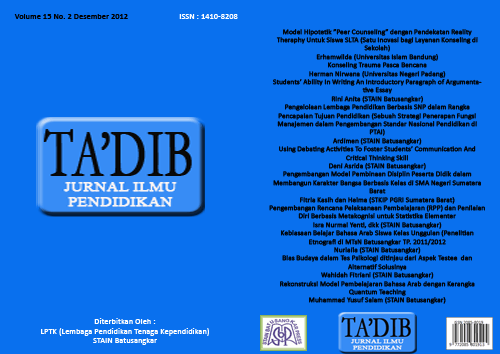
USING DEBATING ACTIVITIES TO FOSTER STUDENTSÔÇÖ COMMUNICATION AND CRITICAL THINKING SKILL
DOI:
https://doi.org/10.31958/jt.v15i2.227Abstract
This article discusses about the use of the debating┬áactivities in fostering studentsÔÇÖ communication and critical thinking skills. The aims of debating are to enable the students to be active and creative in the classroom. Debating is also assumed as a valuable learning activity for teaching critical thinking and improving communication skills. Debating is an effective pedagogical way because of the level of responsibility for learning and active involvement required by all student debaters. Many teachers realize that the best strategy for motivating the students to communicate in English is by changing the situation in the class. By creating an interesting and motivating environment, the students are expected to be immersed in the activities given by the teachers. Moreover, an ideal teacher should provide opportunities for students to talk by using group work or pair work, and limiting teacher talk. Therefore, the teacher should keep encouraging the students to get involved during the process of learning in the class most of the time.
References
Armia, C. dan Hakim, L, (ed). (1999). Reformasi Manajemen Pendidikan Tinggi. Jakarta: Media Ekonomi Publishing.
Fattah, N., (2009). Landasan Mana-jemen Pendidikan. Bandung: Remaja Rosdakarya.
Peraturan Pemerintah Nomor 19 tahun 2005 tentang Standar Nasional Pendidikan.
Pidarta, M., (2004). Manajemen Pen-didikan Indonesia. Jakarta: Rineka Cipta.
Ramelan, R., (1999). Manajemen Perguruan Tinggi dalam Antisipasi Tahun 2020: Riset dan Hubungan Kelembagaan, dalam Armia, C. dan Hakim, L, (ed). (1999). Refor-masi Manajemen Pendidikan Tinggi. Jakarta: Media Ekonomi Publishing.
Suhendro, B., (1999). Pengelolaan Pen-didikan Tinggi dalam Menuju Peningkatan Kualitas yang Ber-kelanjutan dalam Armia, C. dan Hakim, L, (ed). (1999). Reformasi Manajemen Pendidikan Tinggi. Jakarta: Media Ekonomi Publishing.
Downloads
Published
How to Cite
Issue
Section
License
Copyright (c) 2016 DENI ASRIDA

This work is licensed under a Creative Commons Attribution-NonCommercial-NoDerivatives 4.0 International License.
Authors who publish with this journal agree to the following terms:
- Authors retain copyright and grant the journal right of first publication with the work simultaneously licensed under a?áCreative Commons Attribution License?á(CC-BY-NC)?áthat allows others to share the work with an acknowledgement of the work's authorship and initial publication in this journal.
- Authors are able to enter into separate, additional contractual arrangements for the non-exclusive distribution of the journal's published version of the work (e.g., post it to an institutional repository or publish it in a book), with an acknowledgement of its initial publication in this journal.
- Authors are permitted and encouraged to post their work online (e.g., in institutional repositories or on their website) prior to and during the submission process, as it can lead to productive exchanges, as well as earlier and greater citation of published work.