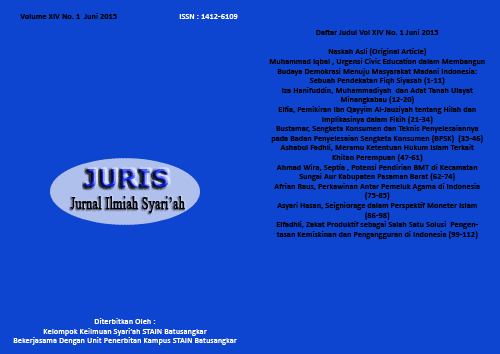
ZAKAT PRODUKTIF SEBAGAI SALAH SATU SOLUSI PENGENTASAN KEMISKINAN DAN PENGANGGURAN DI INDONESIA
DOI:
https://doi.org/10.31958/juris.v14i1.300Abstract
Indonesia, as one of the majority Moslem population in the world, is potentially promising for the growth and the development of zakah (divine tax) program, especially property, and to be made more productive, both in terms worships and practices of Islamic values, and economic activities in general. By means of zakah raising institution (BAZ), the process of raising and distributing of zakah will be more effective and guaranteed. Furthermore, zakah is believed to be able to solve problems dealing with poverty resulting from the increase numbers of unemployement. Productive zakah, for example, give an opportunity for the zakah receivers to make use the money or property to start a new better life.
Kata kunci:  productive tithe/zakah, distribution, unemployment , eradicate povertyReferences
Asmin, 1986. Status Perkawinan antar Agama, ditinjau dari Undang-undang No.1 tahun 1974, Jakarta: PT Dian Rakyat,
Eoh, O.S. Sh, MS, 2001. Perkawinan Antar Agama Dalam Teori dan Praktek, Jakarta: PT Raja Grafindo Persada, cet ke-2
Ichtiyanto, 2003. Perkawinan Campuran dalam Negara Republik Indonesia, Jakarta: Badan Litbang Agama dan Diklat Keagamaan Departemen Agama Republik Indonesia
Jafizham, T, 2006, Persintuhan Hukum Di Indonesia Dangan Hukum Perkawinan Islam, Jakarta: PT Mestika.
Peraturan Pemerintah Nomor 9 tahun 1975 tentang Pelaksanaan Undang-undang Nomor 1 tahun 1974 tentang Pekawinan
Stbl 1898 No. 158 tentang Peraturan Perkawinan Campuran
Syafi’i, Nasul Umam, dan Ufi Ulfiah, 2004. Ada Apa dengan Nikah Beda Agama, Tangerang: Qultum Media.
Republik Indonesia. 1974. Undang-undang Nomor 1 tahun 1974 tentang Perkawinan, Lembaran Negara RI Tahun 1974 No. 1. Jakarta: Sekretariat Negara
Republik Indonesia. 2006. Undang-undang Nomor 23 tahun 2006 tentang Administrasi Kepen-dudukan, Lembaran Negara RI Tahun 2006 No. 124. Jakarta: Sekretariat Negara
Downloads
Published
How to Cite
Issue
Section
License
Copyright (c) 2016 Juris

This work is licensed under a Creative Commons Attribution-NonCommercial-NoDerivatives 4.0 International License.
Authors who publish with this journal agree to the following terms:- Authors retain copyright and grant the journal right of first publication with the work simultaneously licensed under a Creative Commons Attribution License that allows others to share the work with an acknowledgement of the work's authorship and initial publication in this journal.
- Authors are able to enter into separate, additional contractual arrangements for the non-exclusive distribution of the journal's published version of the work (e.g., post it to an institutional repository or publish it in a book), with an acknowledgement of its initial publication in this journal.
- Authors are permitted and encouraged to post their work online (e.g., in institutional repositories or on their website) prior to and during the submission process, as it can lead to productive exchanges, as well as earlier and greater citation of published work (See The Effect of Open Access).